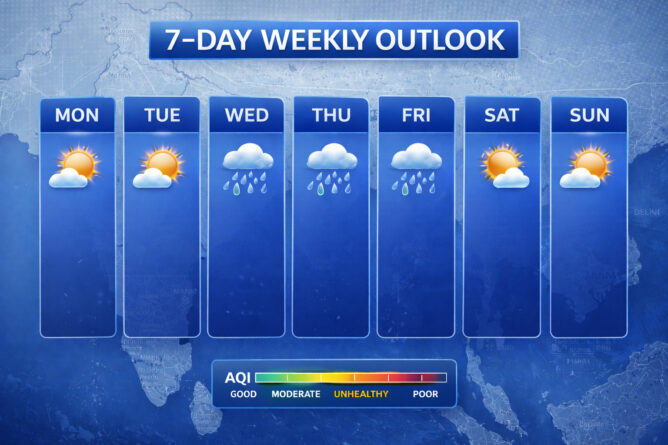
Analyzing the upcoming meteorological patterns is crucial for effective operational planning across numerous sectors. Businesses ranging from agriculture to logistics depend heavily on accurate predictions of temperature shifts, precipitation likelihood, and wind patterns. This isn’t just about grabbing an umbrella; it’s about resource allocation and risk mitigation.
We’ve scrutinized the data for the coming seven days to provide a clear outlook. Understanding these nuances helps stakeholders adjust schedules proactively, minimizing downtime associated with adverse conditions. Let’s look closely at what the atmosphere has in store for us this time around.
Forecasting the Week Ahead: Key Metrics for Business Continuity
This section lays out the essential data points that matter most for decision-makers reviewing their operational calendars. We’re looking beyond simple highs and lows; the focus remains squarely on actionable intelligence derived from the atmospheric models. It’s about establishing reliable baselines for the next iteration of the Weekly Weather Forecast.
Temperature Trends: Managing HVAC and Inventory
We anticipate a gradual warming trend beginning Tuesday, pushing daytime highs into the mid-70s Fahrenheit by Thursday. Overnight lows will remain relatively moderate, generally staying above 55 degrees, which is good news for outdoor work scheduling. This temperature shift necessitates checking HVAC settings, particularly for facilities storing temperature-sensitive inventory.
We should note the difference between Monday’s cooler starting point and the mid-week peak. That variance, while not extreme, requires a small adjustment in energy consumption planning, doesn’t it? Smart facilities managers already account for this sort of predictable fluctuation.
Precipitation Likelihood: Scheduling Outdoor Projects
Rain chances are highest early in the week, specifically Monday afternoon and again late Wednesday evening. The expected rainfall volume appears light, categorized mostly as drizzle or brief showers rather than sustained downpours. Consequently, major disruptions are less probable than inconveniences.
For construction sites or delivery routes heavily reliant on dry conditions, scheduling critical tasks around that mid-week break—Wednesday morning through Thursday—looks strategically sound. It’s always better to bake these probabilities into the initial timeline, frankly.
Wind Speed Analysis: Equipment Safety and Transport
Wind speeds are projected to remain below 15 mph for the vast majority of the week, which is generally favorable for crane operations and drone surveying. However, there is a noticeable gust factor expected on Friday morning, peaking near 22 mph around 10 AM local time.
This brief elevated wind period warrants attention for securing loose materials on exposed sites. Even minor increases in wind velocity can complicate precise material handling, so pre-emptive securing measures are advisable before that Friday morning spike hits.
The shift in atmospheric pressure accompanying these wind changes often signals underlying instability, even if the precipitation remains minimal. Paying attention to the barometric readings alongside the surface wind data gives a fuller picture of potential localized turbulence effects.
Air Quality Index (AQI) Assessment
Air quality looks stable throughout the forecast period, thankfully. The AQI is predicted to hover comfortably in the “Good” to “Moderate” range, generally staying below 60. This minimizes concerns regarding mandated reductions in outdoor work hours due to particulate matter or ozone levels.
This consistency is beneficial for sectors like outdoor sales or large-scale warehousing operations that benefit from naturally ventilated spaces. We aren’t anticipating any regulatory slowdowns related to air quality concerns this time around.
We should keep an eye on Sunday, though; the model shows a slight uptick in localized pollution indicators that bears monitoring as we move toward next week’s projections. It’s a small anomaly, but worth flagging now.
Navigating the Mid-Week Stability
Tuesday and Wednesday present the most stable conditions overall before the late-week wind variable emerges. These two days offer excellent windows for high-output tasks that require consistent, predictable environmental parameters.
Consider consolidating critical inspections or maintenance routines during this sweet spot. Capitalizing on these fewer-variable days translates directly into improved project timelines and reduced unforeseen costs associated with weather delays, naturally.
Anticipating Weekend Shifts
The outlook for the weekend suggests a return to cooler air masses moving in from the northwest. While precipitation isn’t heavily favored, the drop in temperature means preparing for conditions more akin to the start of the week.
This cooler return impacts planning for events or retail operations that rely on steady foot traffic influenced by perceived comfort levels. It signals a need to perhaps ramp up heating systems slightly earlier than projected based solely on daytime highs.
Frequently Asked Questions Regarding Operational Planning
What specific guidance should logistics managers use regarding Monday’s rain chance?
Logistics teams should build in a 30-minute buffer for delivery arrival times across all routes scheduled between 1 PM and 5 PM Monday. This accounts for reduced visibility and slick road surfaces, even with light rain volume.
How will the moderate AQI affect employee health protocols?
Given the Moderate AQI band (below 60), no specific enhanced respiratory protection protocols are required for the general workforce, according to standard occupational guidelines. Routine hydration reminders remain sufficient.
Is the temperature fluctuation significant enough to warrant emergency cold weather preparedness?
No, the fluctuation remains within typical seasonal variability, staying above freezing overnight. Standard operating procedures for mild temperature swings are adequate; specialized extreme weather protocols aren’t triggered by this Weekly Weather Forecast.
It’s clear that preparation hinges on nuanced reading of the atmospheric data rather than broad generalizations. By focusing on these specific metrics—temperature variance, timing of light rain, and brief wind anomalies—organizations can truly optimize their next seven days, ensuring their strategic Weekly Weather Forecast planning pays dividends.